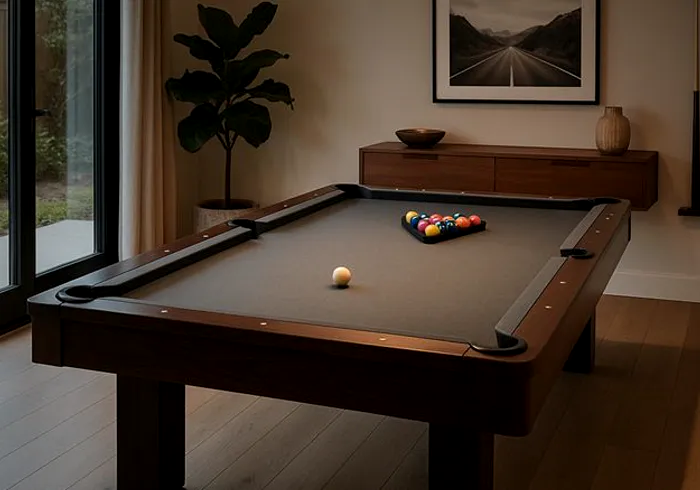
One-Pocket Strategy for Beginners
One-pocket is the chess of pool: each player owns a single corner pocket at the foot of the table, first to eight balls in their own pocket wins, and every shot is a move in a longer battle. Newcomers from 8-ball and 9-ball usually get dismantled at first, because the instincts that win rotation games, shoot the open ball, clear the table, are frequently the wrong move here.
The learning curve is real, but so is the payoff. Here is the strategic foundation that keeps a beginner competitive.
The battle for position, not pockets
In one-pocket, a ball sitting near your pocket is worth almost as much as a ball already in it, because it scores whenever you get a shot and it haunts your opponent every inning. So the real game is territorial: shot after shot, nudge balls toward your corner and away from theirs, even when nothing is going in.
This reverses rotation-game instincts. An open shot into your pocket might still be wrong if the cue ball then leaves your opponent an easy answer. The question on every shot is not can I make this, but what does the table look like for both of us afterward. Players who grasp that single idea stop losing immediately to anyone who has not.
Defense first: the beginner's default
Until you can read the table like a veteran, make defense your default. A good one-pocket shot usually does two or three quiet things at once: bumps a ball toward your hole, takes a ball off their side, and leaves the cue ball somewhere sterile, frozen to a rail or buried behind the stack, where your opponent has no offense toward their pocket.
Banks are your main offensive weapon, because your pocket sits behind you at the foot of the table while most balls face the other way. Learn one reliable cross-corner bank toward your hole and drill it. But fire only when the miss is safe: a banked ball that misses and settles near your pocket is fine; one that drifts to their side of the table is a gift. The classic beginner death in this game is selling out one loose ball at a time.
The break: thin the stack to your side
One-pocket has the most strategic break in pool, and smashing the rack is close to suicide. The standard break clips the head ball or the second ball thin on your pocket side, with the cue ball rolling to the long rail and dying near your opponent's end, ideally frozen. Done right, three or four balls loosen and drift toward your corner while your opponent faces a rail-frozen cue ball with the stack between them and their pocket.
It takes practice to find the right thinness and speed on your table, and it is worth every rack you spend on it. Winning the break exchange often means starting every game with the territory already tilted your way, and in a game this positional, early territory compounds.
Counting, pace, and spotting balls
Always know the count: how many balls each player needs, and how many remain on the table. The math changes correct play completely. If you need one ball and your opponent needs six, attack anything close to your pocket. If you are down five to seven, stop trading evenly and start stirring the stack, because quiet exchanges favor whoever is ahead.
One-pocket is slow by design, so settle into the pace; rushing an exchange because you are bored is how leads evaporate. Know the housekeeping rules too: balls pocketed in the four non-scoring pockets spot back on the foot spot, and in common rule sets a scratch costs you a ball, spotted after the inning by paying one back. Owed balls swing close games, so track them as carefully as the score.
Why one-pocket improves your whole game
Even if you mostly play league 8-ball, one-pocket is the best training game in pool. It forces skills the rotation games let you avoid:
- Banks and kicks, because your pocket is usually behind the balls.
- Precise speed control, since most shots are soft moves, not pots.
- Safety play and cue ball hiding, on nearly every inning.
- Patience and shot selection under real consequences.
A season of one-pocket makes your 8-ball safeties meaner and your position play tighter, because you have spent months thinking two shots ahead for two players at once. It is the fastest way to start seeing the whole table instead of just the next ball.
Our picks
Links open the current selection and price on Amazon so you can compare real reviews before buying.
Banking with the Beard by Freddy Bentivegna
Bank shot systems for one-pocketFreddy the Beard was a legendary one-pocket and banks player, and his book lays out practical banking systems with the money-game context baked in. Banks are the offense of one-pocket, and this is the reference.
Check price on Amazon
Full regulation ball set
One-pocket uses all fifteenOne-pocket racks all fifteen balls and grinds long sessions out of them, including plenty of rail-first contact. A durable regulation set on the practice table handles the volume without wearing out your best balls.
Check price on AmazonPosition donuts / ball position markers
Rebuilding layouts and break practicePaper donut markers let you recreate the same break position or a tricky end-game layout over and over. Repeating the one-pocket break until the stack thins your way is exactly what these are for.
Check price on AmazonFrequently asked questions
What are the basic rules of one-pocket?
Each player owns one foot-corner pocket, and the first to legally pocket eight balls in their own pocket wins. Balls made in the other four pockets spot back on the foot spot, and common rule sets charge a ball for scratches and fouls. Any ball may be shot at any time; there is no rotation order.
How should a beginner break in one-pocket?
Hit the top of the stack thin on your pocket side at soft to medium speed, sending a few balls toward your corner while the cue ball travels to the opposite long rail and dies near your opponent's end. Never smash the rack; a wide-open table in one-pocket helps whoever shoots next, and that is not you.
Why do I keep losing at one-pocket even though I shoot straighter than my opponent?
Because one-pocket punishes offense-first instincts. Every makeable shot that leaves your opponent an answer near their pocket loses ground. Focus on moving balls to your side, leaving the cue ball sterile, and only shooting when a miss stays safe, and the games will tighten fast.
Related guides
LeaguePool is reader-supported. When you buy through links on this site we may earn an affiliate commission at no extra cost to you. As an Amazon Associate we earn from qualifying purchases.