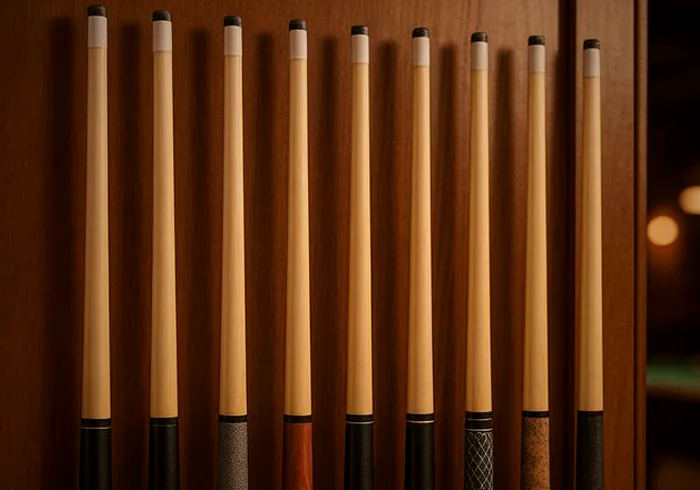
Best Pool Cues Under $500
Somewhere between $300 and $500, pool cues stop being sticks and start being equipment. Below that line you are mostly paying for decals and a decent hunk of maple. Inside it, low-deflection shafts become standard, construction tightens up, and a couple of carbon fiber options sneak in. This is the bracket a serious league player or improving amateur should be shopping.
The four cues below are the ones we would actually hand to a friend who plays twice a week and wants gear that will not hold them back for the next decade.
What $500 Actually Buys You
The jump from a $150 cue to a $450 cue is bigger than the jump from $450 to $1,500. At this level you get a shaft engineered to reduce cue ball squirt, a joint that screws together solid and stays that way, wood that has been properly dried and turned in stages, and a tip worth keeping instead of replacing on day one.
What you do not get is exotic inlay work. Cues in this range keep the ornamentation modest because the budget went into the shaft and the construction. That is the right trade. Nobody ever ran a rack because of mother of pearl.
Low Deflection Is the Standard Here
Five years ago a low-deflection shaft was an upgrade you paid extra for. In this bracket it is the default. Lucasi ships its Zero Flexpoint shaft on the Custom line, Mezz includes its own well-regarded shaft technology, and Cuetec puts a full carbon fiber Cynergy shaft on cues sitting right at the top of this price range.
Why it matters: hit the cue ball off center for spin and a standard shaft pushes it slightly off your aim line. LD shafts shrink that error. If you use english at all, and you should, an LD shaft makes your aiming more honest and your misses more informative.
Wood or Carbon in This Bracket
Carbon fiber shafts start showing up near the $500 ceiling, mostly through Cuetec. Carbon is stiffer, immune to warping and humidity, and very low deflection. The downside is feel. Some players find carbon lively and precise. Others miss the softer feedback of maple. Neither camp is wrong.
Our honest advice: if you sweat your equipment and want zero maintenance, go carbon. If you grew up on wood and like the way a maple shaft talks to you on soft shots, a quality LD maple shaft like the Zero Flexpoint gives up very little in performance.
The Four Picks Explained
The Lucasi Custom LZC10 is the benchmark: understated looks, an excellent Zero Flexpoint LD shaft, a Uni-Loc quick release joint, and build quality that punches above the price. The Mezz EC7 series brings Japanese precision and one of the best-hitting production shafts anywhere, and Mezz resale value holds up if you ever move on. The Cuetec Cynergy Truewood is the carbon play, pairing the same Cynergy shaft Shane Van Boening uses with a real wood butt at a price that undercuts Predator badly. The Pechauer JP series is the made-in-USA option, turned in North Carolina, with a hit that feels hand built because it largely is.
What to Skip
Skip anything in this range that spends its budget on flash. A $450 cue covered in linen wraps, fake ivory, and eight-point spliced veneers had to cut costs somewhere, and it is always the shaft. Skip no-name carbon cues from marketplace brands you cannot find a phone number for. Carbon quality varies enormously, and a bad carbon shaft is worse than good maple.
And do not pay for a fancy case out of your cue budget. A $40 hard case protects a cue exactly as well as a $200 one.
One more habit worth picking up at this level: buy from a dealer who inspects and rolls cues before shipping, then check the cue yourself the day it lands. Sight down the shaft, roll it on a flat table, screw the joint together a few times to make sure it seats clean and snug. Every brand here has solid quality control, but wood is wood, and a reputable seller will exchange a cue with a visible roll wobble without an argument. Ten minutes of inspection on day one protects a purchase you will probably keep for ten years, and it teaches you what a straight, healthy cue feels like for the rest of your playing life.
Our picks
Links open the current selection and price on Amazon so you can compare real reviews before buying.
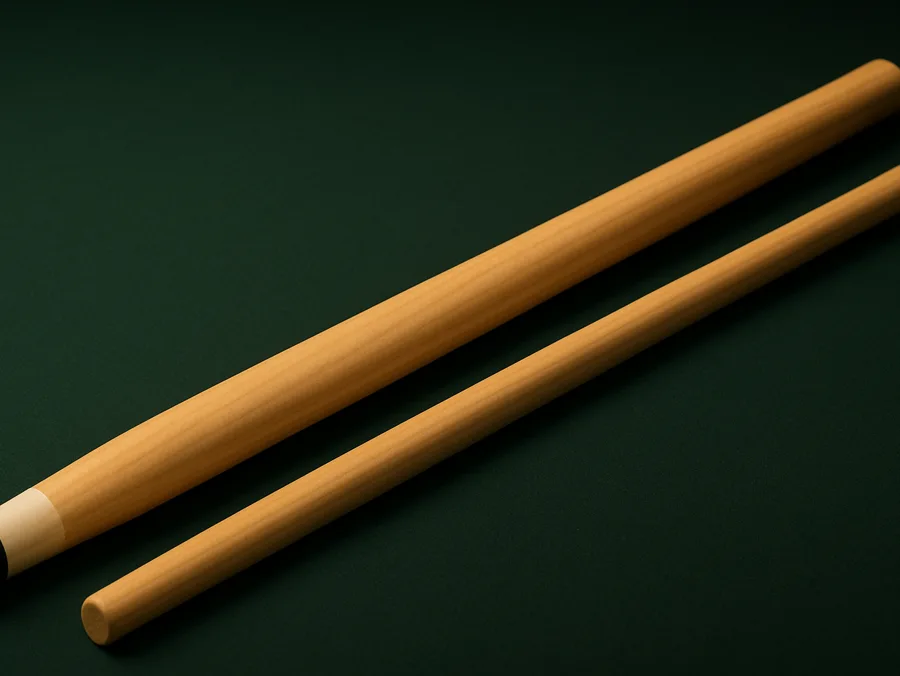
Lucasi Custom LZC10
Best all-around valueZero Flexpoint LD shaft, Uni-Loc joint, clean construction. The default recommendation in this bracket, and it plays like cues costing hundreds more.
Check price on AmazonMezz EC7 Series
Best hit and resale valueJapanese build precision and a shaft players rave about. Mezz cues hold their value better than almost anything else at this price.
Check price on AmazonCuetec Cynergy Truewood
Carbon fiber on a budgetThe same Cynergy carbon shaft the pros use, mated to a handsome wood butt. The cheapest legitimate path to a tour-level carbon shaft.
Check price on AmazonPechauer JP Series
Made in USA craftsmanshipTurned and finished in North Carolina with old-school attention to wood selection. The hit is soft, solid, and unmistakably handmade.
Check price on AmazonFrequently asked questions
Is a $500 cue really better than a $150 cue?
Yes, and the difference is mostly in the shaft. Cues in this range include low-deflection shafts and tighter construction, which directly affect where the cue ball goes. Below about $250 you are mainly paying for looks.
Should I buy carbon fiber or maple at this price?
Carbon gives you zero maintenance and maximum consistency. Good LD maple gives softer feedback that many players prefer. Performance is close enough that feel should decide it, so try both if you can before buying.
Do these cues come with a good tip?
Generally yes. Lucasi, Mezz, Cuetec, and Pechauer all ship playable layered or quality single-layer tips at this level. You may want a pro to install your favorite tip eventually, but nothing here needs replacing out of the box.
Related guides
LeaguePool is reader-supported. When you buy through links on this site we may earn an affiliate commission at no extra cost to you. As an Amazon Associate we earn from qualifying purchases.