Easy Pool Trick Shots for Beginners
Trick shots look like magic. Most of the classics are physics plus a careful setup. If you can make a medium-length cut shot, you can learn a handful of crowd-pleasers in an afternoon, and here is the part nobody tells beginners: the setup does most of the work. Place the balls precisely and several famous shots very nearly make themselves.
What follows are easy, named trick shots you can build on any table, why each one works, and which ones are safe to try on a bar table with the owner watching.
Start with jaw shots: guaranteed applause
The simplest family of trick shots parks object balls in the jaws of a pocket, where almost anything that touches them falls. Put a ball on the edge of each jaw of a corner pocket so together they nearly block the opening, then set a third ball a foot away, lined up between them. Fire the third ball at the gap and all three drop in sequence. It looks impossible. It is close to automatic.
Here is a variation. Freeze two balls together in front of a side pocket, angled slightly off line. Hit the back ball of the combo and the front ball walks into the pocket on a line the audience did not see coming. Frozen combos always travel along the line through the centers of the two frozen balls. That is the whole trick.
The butterfly shot
The butterfly is the classic multi-ball spread. Set six balls in the middle of the table in two mirrored arcs, three per side, frozen in pairs, each pair pointed at a different pocket. Drive the cue ball firmly into the center of the formation and all six scatter symmetrically and drop into all six pockets at once.
Precision matters here. Use the rail diamonds to line up each frozen pair with its pocket, and check every contact line from behind before you shoot. Your first setup will eat twenty minutes. Once you have found the placements on your own table, mark them with paper reinforcement rings and you can rebuild the whole thing in a minute.
Frozen-rail and chain reaction shots
Freeze three or four balls in a row along the cushion, each touching the next, with the last ball a few inches from the corner pocket. Strike the first ball in the chain nearly straight down the rail. The energy passes through the line and the end ball goes in while the others barely move. It is a momentum-transfer demonstration that looks far harder than it is.
Chain reaction clusters do the same thing out in the open. Arrange five or six balls so each frozen pair aims at a pocket, then trigger the first pair with the cue ball. One stroke, balls dropping everywhere. Build these slowly and re-check the aim lines every time, because a frozen pair off by a few degrees misses by a diamond.
The over-and-under jump shot
The signature beginner jump trick clears an obstacle. Lay a rack frame or a cue stick across the table and jump the cue ball over it into an object ball waiting on the far side. A legal jump means elevating the butt of your cue about 45 degrees and striking down on the cue ball so it bounces off the slate. Never scoop under the ball. That is a foul, and it tears cloth.
Practice on your own table or with permission. Use a firm short stroke and start with a low obstacle, a piece of chalk say, before you graduate to a full rack. A dedicated jump cue makes this dramatically easier than a playing cue because it is short and light.
Party-safe shots and practice habits
On somebody else's table, stick to setup shots: jaws combos, butterflies, frozen rails, chain reactions. None of them need an elevated cue and none can damage anything. The coin-in-the-wrapper and bottle shots you see online involve striking a coin or shooting out of a bottle resting on the cloth, and one slip gouges the bed or dents a rail. Practice those at home on a table you own, with a towel under any prop.
- Set up each shot using the rail diamonds as reference points.
- Walk behind every frozen pair and sight its line to the pocket.
- Shoot with a smooth, level, medium-firm stroke unless the shot demands otherwise.
- Rebuild and repeat until you make it three times in a row before you show anyone.
Our picks
Links open the current selection and price on Amazon so you can compare real reviews before buying.
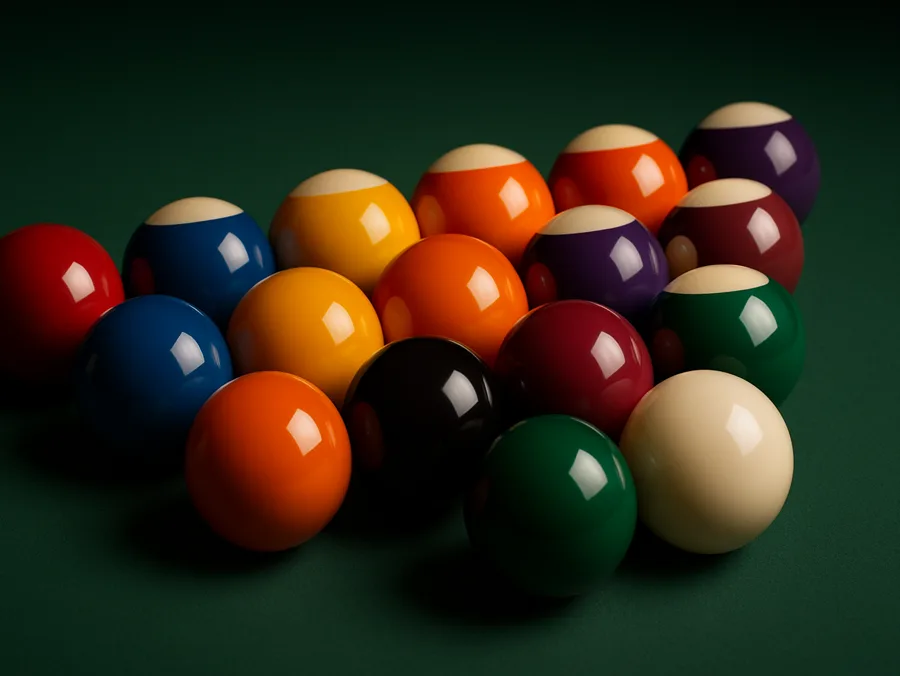
Extra billiard ball training set
Multi-ball setups without wearTrick shot practice is hard on balls, and you often want more than one cue ball on the table. A second set of regulation balls lets you build butterflies and chain reactions without dragging your good Aramith set out for abuse.
Check price on Amazon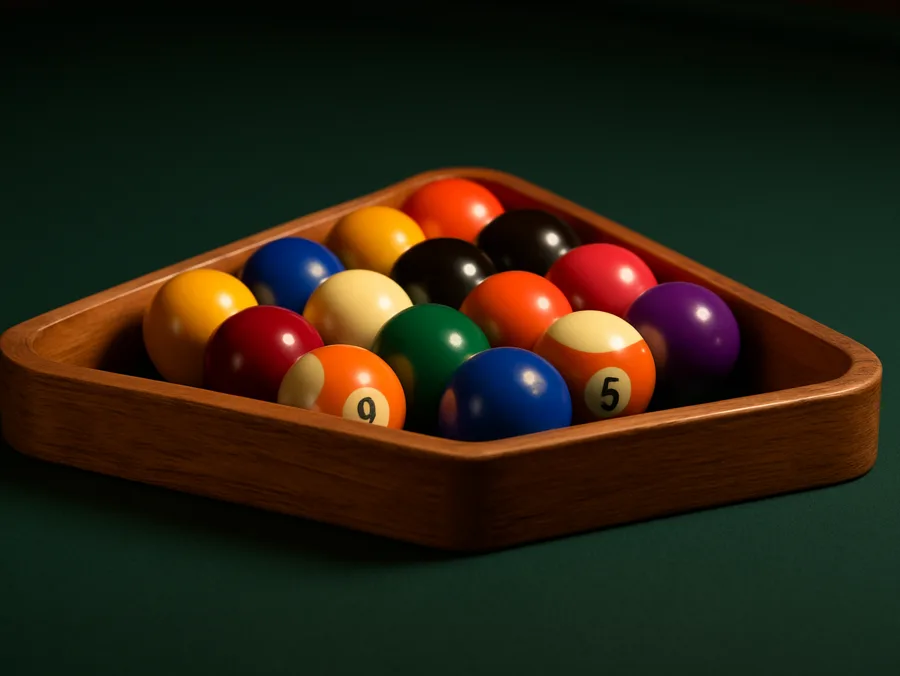
Wooden triangle rack
Jump obstacle and setup guideA basic wooden triangle doubles as the classic over-and-under jump obstacle and as a placement guide when you are building tight ball formations. Cheap enough that a stray cue ball landing on it is no tragedy.
Check price on AmazonByrne's Treasury of Trick Shots in Pool and Billiards
Hundreds of diagrammed shotsRobert Byrne's collection is the standard reference, with clear diagrams and honest notes on which shots are setup shots and which take real skill. It will keep you busy for years past the beginner stage.
Check price on AmazonFrequently asked questions
What is the easiest trick shot to learn first?
Start with a jaws shot. Place two balls on the edges of a corner pocket and fire a third between them so all three drop. The setup does nearly all the work, and most players make it on the first or second try.
Will trick shots damage the table felt?
Setup shots like butterflies and frozen-rail runs are completely felt-safe. The risk comes from jump shots and prop shots with coins or bottles, where a mis-hit can gouge cloth. Learn jumps with proper down-stroke technique and keep props off tables you do not own.
How do I make frozen balls stay in place while I set up?
Press each ball gently into the cloth as you place it so it seats in the nap, and build your formations away from table rolls. Paper reinforcement rings under the important balls let you rebuild a formation quickly, and most cloth hides them from a few feet away.
Related guides
LeaguePool is reader-supported. When you buy through links on this site we may earn an affiliate commission at no extra cost to you. As an Amazon Associate we earn from qualifying purchases.