
Last Pocket Rules: How Last Pocket 8-Ball Works
In last pocket 8-ball, the 8 has to go in the same pocket as your last solid or stripe. You don't call the 8-ball pocket. Your seventh ball calls it for you, wherever it drops. Everything else plays like normal 8-ball.
That one change creates a pile of side questions nobody agrees on: what happens if both players end up with the same pocket, whether a scratch on the 8 loses, what to do when the 8 hangs in a pocket that isn't yours. This page gives you the common answers to each, the old BCA wording where one exists, and the strategy that wins once the table shrinks to one hole.
The last pocket rule in one minute
Break, claim solids or stripes, and run your group the usual way. The difference shows up when your seventh ball drops. Say you're on solids and your last solid goes in the top-left corner. The top-left corner is now your last pocket, and the only pocket where the 8 wins the game for you.
Three details trip up first-timers:
- The pocket is set by where the ball went, not by who made it. If your opponent accidentally pockets your last ball, that pocket is still your last pocket.
- Your pocket is fixed once the ball drops. You can't trade it for a better one later because the 8 moved.
- You still need a legal shot on the 8. Hit it first, make it in your pocket, and don't scratch.
Dr. Dave Alciatore's pool site lists last pocket as one of the standard ways to handicap a stronger player in 8-ball, and that's a good way to think about it: same game, harder finish.
Last pocket vs regular 8-ball
| Situation | Standard league 8-ball (APA) | Last pocket 8-ball |
|---|---|---|
| Which pocket the 8 goes in | Any pocket you mark | The pocket your last group ball went in |
| 8 in a different pocket | Loss of game | Loss of game |
| Scratch while shooting the 8 | Loss of game | Varies: many bars play it as a loss; the 1980 BCA option did not |
| 8 made on a legal break | Depends on the rule set | Wins under the 1980 BCA option, regardless of pocket |
| Opponent makes your last ball | No effect on the 8 | That pocket becomes your last pocket |
| Both players' last balls in one pocket | Doesn't matter | Usually not allowed; see below |
| 8 hanging in a pocket | Any pocket, so shoot it in | If it's not your pocket, you need a way out (three-rail option) |
If you want the full baseline game first, start with our standard 8-ball guide and bar rules guides.
When both players want the same pocket
This is the most argued last pocket rule, and no current official rulebook settles it. The usual starting point: two players can't have the same last pocket. The first player to drop a last ball in a pocket owns it. If the second player then sinks their last ball in that same pocket, they get a different one. How the new pocket is chosen depends on the room:
| Method | How the second player's pocket is set |
|---|---|
| Owner assigns, corners only | The pocket's owner picks one of the other three corners. If a side pocket was contested, the second player gets the opposite side. |
| Owner assigns, anything goes | The owner picks any other pocket, sides included. |
| Automatic | Contested side: opposite side. Contested corner: the diagonally opposite corner. |
| Shared pocket allowed | Both players keep the same pocket. The endgame turns into a little game of one-pocket around that hole. |
| Shared pocket loses | Sinking your last ball in your opponent's pocket costs you the game. Rare, and harsh. |
The first one is the version Larry Schwartz described in his Billiards Digest article "Last-Pocket Thinking" (July 2010), as quoted on BilliardsForum: the player who claimed the pocket first assigns the other player's pocket, generally a corner, with sides allowed only if agreed before the game. Once the new pocket is assigned, the shooter keeps shooting.
If you're the one assigning, side pockets are usually the meanner choice, since most players find the 8 harder to make in a side than in a corner. Some players disagree when the 8 sits near the middle of the table, where a side can be the easiest bank.
Odd situations and how rooms rule them
Your opponent pockets your last ball
The common ruling: the pocket counts as yours, no matter who made the ball. Some players argue that if an opponent makes your last ball on a foul or an illegal shot, you should get to put the 8 in any pocket. Both versions exist. Pick one before the game.
Both last balls drop on the same shot
Say both players' last balls are in the jaws of one corner and the shot drops both. Some rooms give the pocket to the shooter, since he made his ball on a legal shot. Others give it to whichever ball fell first. One-pocket players will recognize the shooter-wins logic.
Your last two balls drop in different pockets on one shot
Puerto Rico rules, as forum players describe them, use the pocket of the ball that dropped last, since pockets aren't called. If you play call shot, the called ball's pocket is the natural choice.
The 8 hangs in a pocket that isn't anyone's last pocket
A stuck 8 can make the game unwinnable for a player whose pocket is blocked. The fix several old BCA rule books printed is a three-rail option: if both players agree the 8 can't be dug out, a player whose group is cleared may announce a shot where the cue ball hits three or more cushions before contacting the 8 and pocket it in that other pocket to win. The 1980 BCA wording made this an agreed variation, not a default.
The 8 goes in on the break
Under the 1980 BCA last pocket option, an 8 pocketed on a legal break still wins, whatever the pocket. House rules elsewhere may re-spot it or re-rack, so ask.
Scratching on the 8
This one surprises people. The 1980 BCA last pocket option said scratching while the 8 is your object ball is not loss of game. Many bars play it as a loss anyway, just as in their regular 8-ball. There's no single answer, which is exactly why it belongs on the pre-game list below.
Agree on these before you break
Last pocket has no governing rulebook today, so the only rules that count are the ones both players said out loud. Thirty seconds here saves twenty minutes of arguing later.
| Question | Common answers |
|---|---|
| Can we share a last pocket? | No (most common), or yes |
| If I sink my last ball in your pocket, who picks my new one? | You, corners only; you, any pocket; or automatic opposite |
| Does a scratch on the 8 lose? | Loss of game, or ball in hand |
| Is there a three-rail option on a hung 8? | Yes by agreement, or no |
| If you make my last ball on a foul, does that pocket count? | Yes (most common), or I get any pocket |
| Call shot or slop? | Either; it counts for more here because slop can hand you a bad pocket |
| Scratch penalty | Ball in hand anywhere, or behind the line |
Last pocket strategy
In regular 8-ball you clear the easy balls and worry about the 8 at the end. In last pocket the end decides everything, so you plan it first.
- Right after the break, pick your intended last pocket and a backup. Look at where the 8 sits and which pocket it has a natural line to.
- Find your key ball. That's the group ball you'll save for last because it goes into your chosen pocket and leaves easy shape on the 8. Work backward from the 8 to choose it.
- Be careful with your last three balls. Get out of line here and you may be forced to make your last ball in the wrong pocket, which can leave you three hard shots in a row.
- Avoid a side pocket as your last pocket unless the 8 is right there. A side gives your opponent an easy way to make your 8-ball shot ugly.
- If you're stuck, play safe instead of hoping. A missed runout costs more in last pocket, because your opponent's job just got easier and yours didn't.
Defense gets stronger in this game, and good last pocket players lean on it:
- When your opponent is down to the 8, move it as far from their pocket as you can, or put one of your own balls between the 8 and that pocket.
- Block the 8 with one of your balls that you can still make. Your opponent has to deal with the blocker, and you keep a shot.
- When you might miss, miss soft. Leave your ball near the pocket, the way one-pocket players do, so a miss still leaves it hanging for later.
The safety skills from our safety guide and the banking in our bank-shot lesson pay off more here than in any other 8-ball game.
Where last pocket came from
The usual explanation is economic. On coin-operated tables, where you pay per game instead of by the hour, forcing the 8 into one pocket stretches each game out. Last pocket also gives a weaker player more chances to come back, which is why it's used as a handicap.
It used to be in the official book. The Billiard Congress of America printed a "Last Pocket Option" in its 1980 rulebook (page 65), which is where the break, scratch and three-rail rules above come from. According to the San Francisco Billiard Academy, as cited by BilliardsForum, it was still in the 1982 edition and gone by 1985. Players who've compared notes since point out that almost no room plays it exactly as the 1982 text reads.
Today, the APA and BCA Pool League play the standard called-pocket game, not last pocket. The variant lives on in bars, in local events (some local leagues have posted their own last pocket tournament rules), and in the regions where it's simply how 8-ball is played. Players on AZBilliards point to Puerto Rico, Latin America and the Caribbean as strongholds, and Chicago players have described playing it since at least the 1970s, with rules agreed at the start of every game.
Other games called "last pocket"
If you searched "last pocket" and the rules above don't match what you saw, you may be looking at a cousin:
- Rotation last pocket: each ball must go in the pocket where the previous ball dropped. A ball that goes in a different pocket is re-spotted and the turn ends. It's a position-play workout. Our rotation rules cover the base game.
- Bank the 8 (or bank last pocket): the 8 has to go in on a called bank shot, sometimes into your last pocket as well.
- One and fifteen in the sides: the 1 and the 15 must go in opposite side pockets, an old rule that sometimes rides along with last pocket.
- One pocket: a different game entirely, where each player owns one pocket for the whole rack. See one pocket rules.
And if you meant no-pocket billiards, that's carom billiards, played on a table without pockets. Our carom explainer covers it.
Sources
- BilliardsForum: Last Pocket Eight Ball Rules (reproduces the 1980 BCA Last Pocket Option text and quotes Billiards Digest, July 2010)
- Dr. Dave Pool Info: 8-ball rules and handicaps
- APA Official Rules: How to win a game (standard 8-ball comparison)
Our picks
Links open the current selection and price on Amazon so you can compare real reviews before buying.
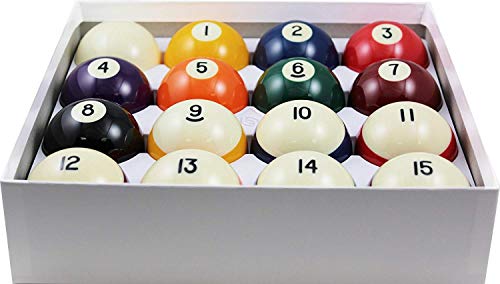
Aramith Crown Standard Ball Set
True-rolling bar-style setLast pocket endgames come down to one exact angle into one exact pocket. A matched phenolic set from Aramith takes out the excuse of a lopsided ball rolling off line on the shot that decides the game.
Amazon price: $127.77 as of 9:04 AM EST. Price and availability can change; Amazon’s price at purchase applies.
Check price on Amazon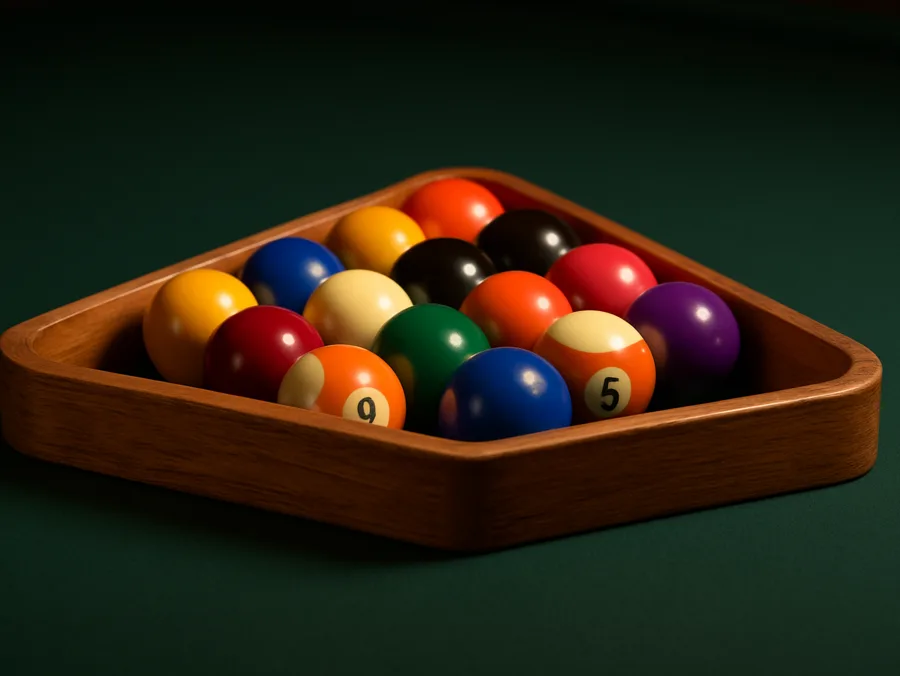
Solid Wood Triangle Rack
Tight 8-ball racksA loose rack spreads the balls unpredictably, and in last pocket the layout of your final few balls decides the game. A solid wood triangle is the plain, traditional way to rack all 15, and a firm frame makes it easier to press the balls together before you lift it.
Check price on Amazon
Master Billiard Chalk 12-Pack
Reliable chalk for long sessionsLast pocket finishes ask for thin cuts and firm spin into one forced pocket. Fresh chalk before every one of those shots keeps a miscue from deciding a game that took twenty minutes to set up.
Amazon price: $12.88 as of 9:08 AM EST. Price and availability can change; Amazon’s price at purchase applies.
Check price on AmazonFrequently asked questions
What is the last pocket rule in pool?
The 8-ball must be pocketed in the same pocket where your last solid or stripe went in. You don't choose a pocket for the 8; your final group ball sets it. Making the 8 anywhere else loses the game.
What if my opponent pockets my last ball?
In most rooms that pocket becomes your last pocket, no matter who made the ball. Some players let you shoot the 8 in any pocket if your opponent made your last ball on a foul. Agree on it before the game.
Can both players have the same last pocket?
Usually not. The first player to claim a pocket owns it, and if the other player sinks their last ball there too, they get a different pocket, most often a corner chosen by the owner or the automatic opposite pocket. A few rooms allow sharing.
Is scratching on the 8 a loss in last pocket?
It depends on the house. Many bars treat it as loss of game like regular bar 8-ball, but the 1980 BCA last pocket option said a scratch with the 8 as your object ball is not loss of game. Settle it before you break.
What happens if the 8 is stuck in the wrong pocket?
Some rooms use a three-rail option from old BCA rule books: if both players agree the 8 can't be dug out, a player on the 8 may announce a shot where the cue ball hits three or more cushions before the 8, and make it in that pocket to win.
Can I choose which pocket my 8-ball pocket will be?
Only by planning. Your 8-ball pocket is wherever your final group ball drops, so you choose it by deciding which ball to save for last and which pocket to send it to. That planning is most of the skill in this game.
Do APA or BCA leagues play last pocket?
Not in their standard formats; both use called-pocket 8-ball. The BCA did print a last pocket option in its 1980 rulebook, and it reportedly stayed through 1982 before being dropped. Today it survives in bars, money games and some local events.
Related guides
LeaguePool is reader-supported. When you buy through links on this site we may earn an affiliate commission at no extra cost to you. As an Amazon Associate we earn from qualifying purchases.