
Rotation Pool (61) Rules
Rotation, sometimes called 61, is the granddaddy of every rotation game on the table. Before 9-ball and 10-ball existed, players in the Philippines and the United States were grinding through all fifteen balls in numerical order, counting points as they went. The game still has a devoted following, and Filipino legends like Efren Reyes grew up on it, which goes a long way toward explaining their frightening cue ball control.
If you can run balls in 9-ball, rotation will humble you. Fifteen balls, full-table position play, and a scoring system where the big balls are worth fighting over make it one of the most demanding games in pool.
The Rack and the Numbers
All fifteen balls are racked in the standard triangle with three balls fixed: the 1-ball at the apex on the foot spot, the 2-ball in the right rear corner from the racker's view, the 3-ball in the left rear corner, and the 15-ball in the center of the rack. Everything else is placed at random.
The math is what makes rotation interesting. Ball values run 1 through 15, and they total 120 points. That means 61 points wins outright, no matter what your opponent does with the rest. The five biggest balls, 11 through 15, are worth 65 points on their own, so a player who controls the high balls can lose most of the rack and still win the game.
How a Turn Works
The breaker shoots from behind the head string and must strike the 1-ball first. From there the rule never changes: on every shot, the cue ball must contact the lowest-numbered ball on the table before anything else. You do not have to pocket the lowest ball, though. Combinations and caroms are legal and central to the game; playing the 1-ball into the 15-ball to pocket 15 points at once is a classic rotation move.
Any ball pocketed on a legal shot counts for its face value and you keep shooting. Miss, and your opponent takes over. Games are typically played as a single race to 61, or across multiple racks with points carried forward until someone crosses the line.
Fouls and Penalties
The classic fouls all apply: scratching the cue ball, failing to hit the lowest ball first, and failing to drive any ball to a rail after contact. Balls pocketed on a foul do not count and are spotted back on the foot spot. Traditional rotation rules put the incoming player behind the head string after a scratch, while many modern games award full ball-in-hand instead; agree on this before you start, because the difference is enormous on a crowded table.
Under traditional rules, three consecutive fouls forfeits the game, so a player stuck in a bad spot cannot simply stall forever.
Strategy: Points, Not Balls
New rotation players run balls; good rotation players count points. Because the high balls carry most of the value, the smart play is often a combination that sends the 13, 14, or 15 toward a pocket rather than a clean shot on a small ball. Watch the running score constantly. If you are at 50, you are looking for eleven points, and that changes which balls matter.
Position play is brutal here. With fifteen balls in numerical order, you are frequently sending the cue ball the full length of the table, threading traffic the whole way. This is why rotation is considered the ultimate cue ball workout, and why players raised on it move the rock so well in every other game.
Rotation vs 9-Ball and 10-Ball
All three games share the lowest-ball-first rule, but they reward different skills. 9-ball is fast and break-dependent. 10-ball adds call-shot discipline. Rotation adds volume and arithmetic: more balls, longer runs, and a score you have to manage like a card count. A single rack can swing on one big combination. If you want a practice game that exposes every weakness in your position play, rack all fifteen and play rotation against a friend, or against yourself with a target score.
A useful handicapping trick from the Philippine pool halls: when a stronger player takes on a weaker one, they simply move the target. The favorite might need 70 or 80 points while the underdog only needs 45. Because every ball has a value, the spot is infinitely adjustable, which is part of why rotation survived a century of money games.
Our picks
Links open the current selection and price on Amazon so you can compare real reviews before buying.

Aramith Crown Standard Ball Set
Full fifteen-ball playRotation uses every ball in the set, so worn or out-of-round balls ruin the combinations the game runs on. A phenolic Aramith set stays true for years of full-rack play.
Check price on Amazon
Hardwood Triangle Rack
Tight fifteen-ball racksA solid wood triangle that racks all fifteen balls snugly matters more in rotation than in 9-ball, since the whole rack has to spread. Look for one with a smooth interior edge that lets you press the balls together.
Check price on Amazon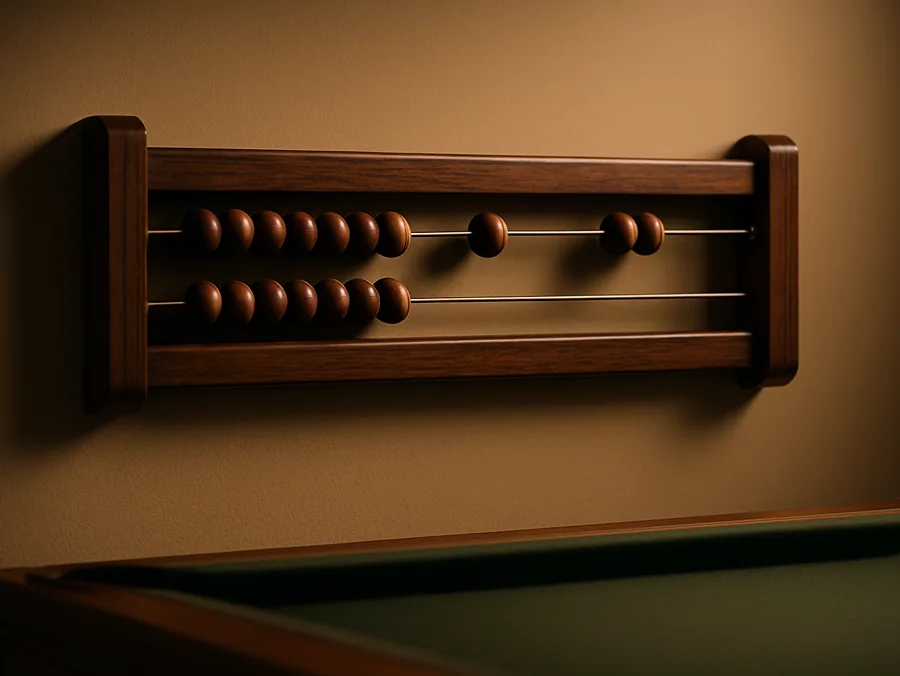
Wall-Mounted Scoring Beads
Tracking points to 61Rotation is a counting game, and arguing about the score mid-rack gets old fast. A string of abacus-style scoring beads over the table lets both players track points at a glance.
Check price on AmazonFrequently asked questions
Why is rotation pool called 61?
The fifteen balls are worth their face values, which add up to 120 points. Since 61 is more than half of 120, the first player to reach 61 points has mathematically won, so the game took the number as its name.
Do I have to pocket the balls in numerical order?
No, you only have to contact the lowest-numbered ball first with the cue ball. Pocketing other balls by combination or carom off that first contact is legal and counts, and it is a core part of rotation strategy.
Can the game end before all the balls are pocketed?
Yes. The moment a player reaches 61 points the game is over, because the remaining balls cannot add up to enough for the opponent to catch up. Skilled players often clinch by taking the high balls early.
Related guides
LeaguePool is reader-supported. When you buy through links on this site we may earn an affiliate commission at no extra cost to you. As an Amazon Associate we earn from qualifying purchases.