
Bank Pool Rules
Bank pool strips the game down to one demanding skill: every ball you score has to be banked off at least one rail before it drops. No hangers, no shots straight into the pocket. That single rule turns a familiar table into a geometry puzzle, and it is why bank pool has a devoted following among players who love reading angles and hate cheap balls.
The Must-Bank Rule
The core of bank pool is right in the name: a ball only counts if it strikes a cushion and then falls into the pocket you called. A ball that goes straight in without touching a rail does not score, even if you meant to sink it, and it is typically spotted back. This applies to every ball, so there is no such thing as an easy shot. Kicks, cross-side banks, and long two-rail banks are your everyday tools here, not trick shots.
Calling Your Shot
Bank pool is strictly call-shot. Before shooting you must declare both the ball and the pocket, and many players also expect the bank itself to be reasonably clear. Only the called ball in the called pocket scores. Any other ball that happens to drop is spotted back onto the table and does not count for you. Combinations and caroms are usually not allowed as scoring shots in the strict version of the game, which keeps everything on clean, single-ball banks.
Scoring and Winning
Each successfully banked and called ball counts as one toward your target. Games are commonly played to five balls with an eight-ball rack, or to eight balls using all fifteen, agreed on before play. You keep shooting as long as you keep making legal called banks. The moment you miss, foul, or sink a ball the wrong way, your turn ends and your opponent steps in. Scoring is hard, so matches often stay close, and a single hot streak of banks can swing a game.
Fouls and Penalties
Standard pool fouls apply: scratching, failing to hit a ball, and not driving a ball to a rail after contact all end your turn. In many bank pool rulesets a foul also costs you a ball, which is spotted back onto the table, similar to the owed-ball concept in one-pocket. That penalty discourages reckless firing. Leaving your opponent a safe, tough bank is often smarter than gambling on a low-percentage one, and the players who win at this game know it.
Our picks
Links open the current selection and price on Amazon so you can compare real reviews before buying.

Aramith Premium Ball Set
Predictable rail reboundsBanking depends on balls that rebound the same way every time, so a high-quality phenolic set gives you the consistent angles you need to trust your reads off the cushion.
Check price on AmazonRail Bank Shot Training Guide
Learning bank anglesA bank-angle practice aid or marker set helps you drill the mirror-system geometry that makes cross-side and two-rail banks repeatable rather than lucky.
Check price on Amazon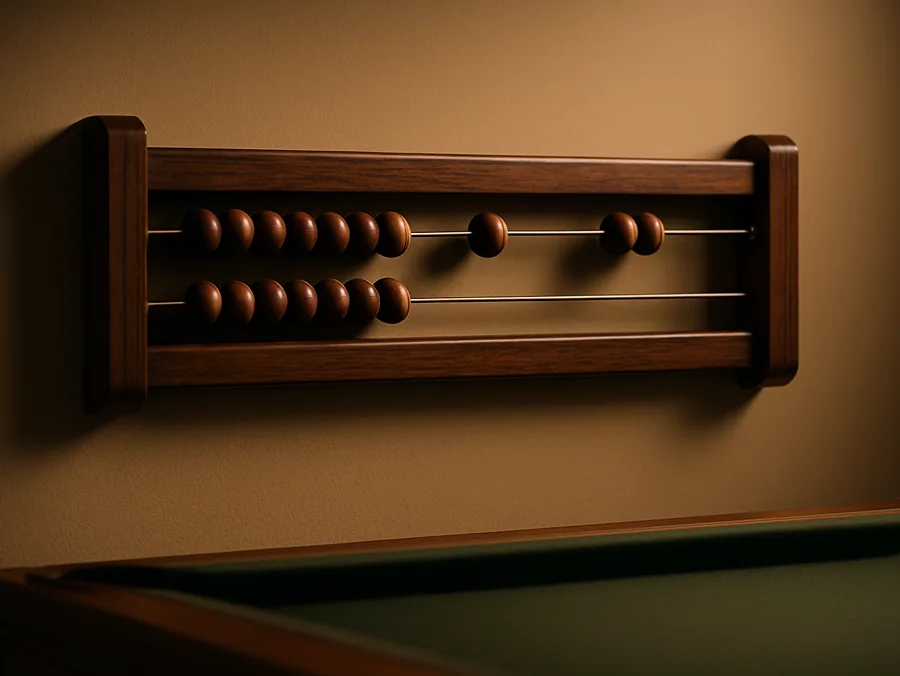
Sliding Bead Score Counter
Tracking the race to five or eightSince bank pool games run to a fixed number of balls, a simple bead counter lets both players keep a clean running total of their banked shots.
Check price on AmazonFrequently asked questions
Does a ball count if it goes in without hitting a rail?
No. In bank pool every scoring ball must strike at least one cushion before dropping. A ball pocketed directly does not count and is usually spotted back on the table.
How many balls do you play to in bank pool?
It depends on the agreement. A common short game is five balls using an eight-ball rack, while a longer game goes to eight balls using the full fifteen-ball rack.
Are combinations allowed in bank pool?
In the strict version, no. Only clean single-ball banks into the called pocket score, which keeps the game about reading and executing bank angles.
Related guides
LeaguePool is reader-supported. When you buy through links on this site we may earn an affiliate commission at no extra cost to you. As an Amazon Associate we earn from qualifying purchases.