Why Is Pool Called Pool? The Name and the Cue Stick
Pool is called pool because of money, not water. A pool was the pot of stakes that every player paid into before a game, from the French poule, and billiard games played by several people for a shared pot took that name! The Oxford English Dictionary finds pool used for a billiards-type game as early as 1797.
The other story you've probably heard, about 19th-century American betting parlors called poolrooms, is true as far as it goes: those rooms took bets on horse races and kept billiard tables for the customers. But the word for the game is older than the polrooms! Below: what the evidence says, where poule comes from, why the stick is called a cue, and how the name picked up its bad reputation.
Why is it called pool? The pot of stakes
In card games of the late 1600s, a pool was the combined stake of everyone at the table. The Online Etymology Dictionary dates that sense to the 1690s and the billiards game to 1808 at the latest, and notes the difference: ordinary billiards was a two-player game, while a pool game took several players who each put money in. The pool could mean the group or the money!
Early evidence shows the money was the point. A Philadelphia publication called The Eye complained in 1808 about a kind of billiards "commonly called pool" where young men staked large sums. An 1842 rule book, How to Play Billiards and Pool, has every player pay his stake to the marker before the game, with three lives each. The winner took the pot.
The OED (as quoted in Wikipedia's article on pool) puts the first billiards use at 1797, in a Virginia newspaper. It gives the earliest specific meaning, now obsolete, as a game where each player had a cue ball of his own color and tried to pocket the others' balls in order, with the winner taking all the stakes.
Pool vs poule: where the word comes from
English borrowed it from French poule, "stakes, booty, plunder", a word whose origin is uncertain. One possibility is the ordinary French poule, meaning hen. The OED floats a story to explain that link: a medieval game, jeu de la poule, where players paid into a pot and threw things at a hen, and whoever hit it first took the money. Treat that as a story. Nobody has shown it's how the word moved...
The swimming pool and the pool of water are a different word entirely, Old English pol, a small body of standing water. The two pools just happen to be spelled the same.
The poolroom: horse betting and billiard tables
This is the version most pages tell, and it has a good source. Mike Shamos, curator of the Billiard Archive, wrote in his history for the Billiard Congress of America that a poolroom in the 19th century was a betting parlor for horse racing. Pool tables were installed so customers had something to do between races, and the two became linked in the public mind. Shamos adds that the unsavory sense of poolrom came from the betting, not from billiards.
The dates show how the two stories fit. Shamos places the betting poolrooms in the 19th century, and the OED already finds the game called pool in 1797, so the parlors didn't coin the word. They spread it, and they gave it a smell: pool for the bet, poolroom for where you placed it, pool for the game on the table in the corner.
Shamos also notes that many games involve a pool of money (poker is one), but the name stuck to pocket billiards and nothing else.
Is it called pool or billiards?
Both, depending on what you mean. Billiards is the family name for every cue sport, with or without pockets. Pool is the American pocket game: six pockets, a cue ball and fifteen numbered balls. Its formal name is pocket billiards, which is how Britannica lists it.
So calling pool billiards is fine in the US. Some players reserve billiards for carom games on a table with no pockets, and in Britain billiards usually means English billiards, played on a snooker table. The pool, billiards and snooker comparison has the full details, with table and ball sizes.
What is a pool stick called?
A cue, or cue stick. Pool stick is everyday American usage and nobody will correct you at a bar, but rule books and players say cue. Britannica defines billiards as a game played with "a long stick called a cue".
The word cue has its own story. Shamos describes the earliest billiards players pushing the ball with a mace, a stick with a heavy head. When the ball sat against a rail, the head got in the way, so players turned the mace around and hit with the handle, called the queue, French for tail. The cue developed from that in the late 1600s, by his account.
| Term | What it means |
|---|---|
| Cue, cue stick | The stick itself; pool stick and billiard stick are casual names for the same thing |
| Mace | The older club that pushed the ball, before the cue |
| Break cue, jump cue | Cues built for one shot |
| Bridge, rake | The stick with a notched head that rests your cue on long shots; rake is the carom name, and the UMB rulebook uses it |
| Cue ball | The white ball you hit with the cue |
The parts of a cue, from tip to bumper, are in pool cue parts explained.
A timeline of the name and the American games
| When | What happened | Source |
|---|---|---|
| 1690s | Pool means the combined stake in card games | Etymonline |
| 1797 | First known use of pool for a billiards-type game, in a Virginia newspaper | OED, via Wikipedia |
| 1808 | A popular form of billiards is "commonly called pool" (Philadelphia's The Eye) | Etymonline |
| 1842 | How to Play Billiards and Pool lays out a stakes game with three lives per player | Etymonline |
| 1850 | Michael Phelan writes the first American book on billiards | Shamos |
| 1878 | First American championship pool tournament, played as fifteen-ball pool | Shamos |
| 1888 or 1889 | Continuous pool replaces fifteen-ball pool as the championship game | 1888 per Shamos; 1889 per Wikipedia's straight pool page |
| 1898 | Pool shark is in print | Etymonline |
| Shortly after 1900 | Eight-ball appears | Shamos |
| 1910 | Straight pool | Shamos |
| Around 1920 | Nine-ball develops | Shamos |
Sources split by a year on continuous pool, and we haven't found a primary record to settle it. The games named here have their own guides: straight pool rules, 8-ball rules and 9-ball rules.
How pool got its bad name, and lost it
Because the word came out of betting, the poolroom carried that baggage for a century. Shamos describes 1920s poolrooms as places where men gathered to loitter, smoke, fight, bet and play, and says politicians regularly went after them to look tough on vice. Even in the 1990s, he notes, getting a billiard license could mean complying with antiquated regulations.
The best-known jab is the song "Trouble" in The Music Man (1957), which lampooned the prejudice against pool halls. Then the movies flipped the image twice. Shamos credits The Hustler (1961) with setting off a boom in new rooms, followed by a decline; by 1985, he writes, Manhattan had two public rooms left, down from several thousand in the 1930s. The Color of Money (1986) brought a new generation in, and the upscale rooms that opened from 1987 on look nothing like the old ones.
Other meanings people search for
- Playing pool means playing the cue game, nothing to do with swimming.
- A betting pool or office pool is the original sense: everyone puts money in, one person or group wins it.
- A pool hall, pool room or pool parlor is a business with pool tables. In the 1800s a poolroom could also mean a horse betting parlor.
- Pool shark, in print by 1898, means an expert player.
- Dirty pool, in print by 1951, means underhanded play, usually in politics.
- Is pool gambling? The game is one of skill, but plenty of people play for money. How money games work, and the etiquette, is in ring games and money pool etiquette.
What other countries call it
In Britain, pool usually means the pub eight-ball game with red and yellow balls, formalized as blackball, while snooker is its own big sport. In France and much of Europe, and in South Korea, carom games without pockets are big, so billiards there often means a three-cushion table. Britannica sums up the old split: pocket billiards is mainly the game of the Americas, carom of France and continental Europe, and English billiards and snooker of Britain and the former empire.
Sources
- Online Etymology Dictionary: pool (card-game sense 1690s, the game by 1808, French poule, 1808 and 1842 quotes, pool shark, dirty pool)
- Mike Shamos, A Brief History of the Noble Game of Billiards, Billiard Congress of America (archived) (poolrooms, the cue, American games and dates)
- Britannica: billiards (cue, pocket billiards, where each game is played)
- Wikipedia: Pool (cue sports) (quotes the OED on the 1797 first use and the jeu de la poule story)
- Wikipedia: Billiard hall (pool hall laws, The Music Man)
- UMB World Rules of Carom Billiard (cue and rake)
Our picks
Links open the current selection and price on Amazon so you can compare real reviews before buying.
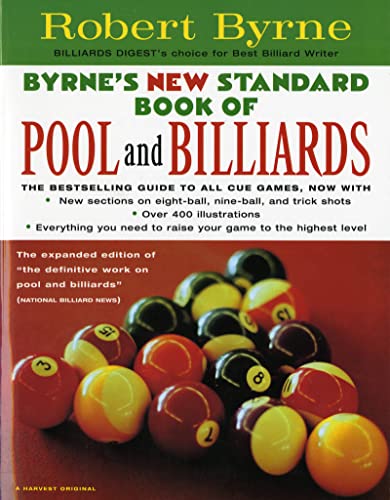
Byrne's New Standard Book of Pool and Billiards
Learning the games the name coversRobert Byrne's guide to eight-ball, nine-ball and the other pool and billiards games. If the history here got you curious about the games themselves, it's a good place to start reading.
Amazon price: $25.24 as of 6:46 AM EST. Price and availability can change; Amazon’s price at purchase applies.
Check price on Amazon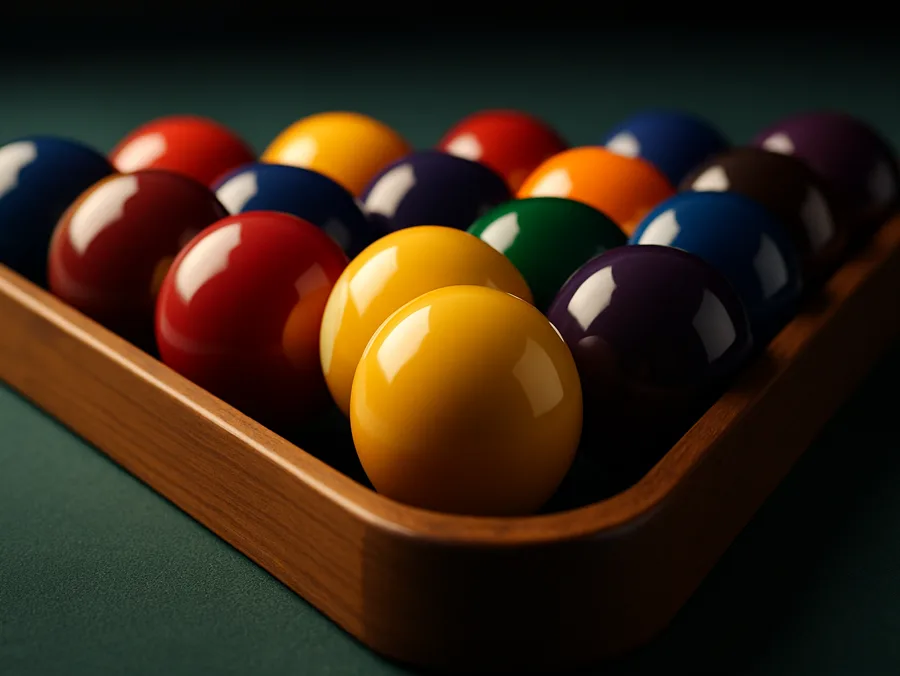
Aramith Premier Ball Set
A classic set for a home tableThe traditional numbered set in Aramith phenolic resin, with the solids and stripes the American games settled on. Aramith calls Premier its best balance of quality and price, and it's the set most home tables never need to upgrade from.
Check price on Amazon
Capulina Tiffany Stained Glass Pool Table Light
Old poolroom atmosphereA three-bulb Tiffany style fixture with real stained glass shades on a 60 inch adjustable chain. It's a decor piece for the old poolroom look; for a full 8 foot table, pair it with proper table lighting.
Check price on AmazonFrequently asked questions
Why is pool called pool?
Because players bet on it. A pool was the shared pot of stakes, from the French poule, and multi-player billiard games played for that pot were called pool by 1797. American poolrooms, which were horse betting parlors with billiard tables, later tied the word to the game for good.
Does pool have anything to do with water?
No. The pool of water comes from Old English pol. The game's name comes from French poule, the stakes, and the two words only share a spelling.
What is a pool stick called?
A cue, or cue stick. The name comes from the French queue, meaning tail: early players turned their mace around and hit with the handle end, and that end became the cue.
Is it called pool or billiards?
Both are correct in the US. Billiards is the family of all cue sports, and pool, formally pocket billiards, is the six-pocket game with fifteen numbered balls. Some players use billiards only for carom games played without pockets.
Did pool get its name from horse racing?
Partly. In the 1800s a poolroom was a horse betting parlor with billiard tables, and that link made the name stick. But pool was already the name of a billiards game played for stakes by 1797, before those parlors.
What does poule mean?
In this sense it means stakes or the pot of a game. It may come from the ordinary French poule, hen, but the link is uncertain.
Why did pool halls have a bad reputation?
The name and the rooms came from betting, and for decades poolrooms were associated with loitering, gambling and fights. Politicians targeted them, and The Music Man joked about it in 1957. Upscale rooms after 1987 changed the image.
Is pool gambling?
Pool is a game of skill, not a gambling game in itself. People do bet on it, and the name comes from that betting, but leagues and tournaments play it as a sport.
Related guides
LeaguePool is reader-supported. When you buy through links on this site we may earn an affiliate commission at no extra cost to you. As an Amazon Associate we earn from qualifying purchases.