Pool Table Ball Return Systems: How They Work and Fixing Jams
A ball return system is one of those mechanisms nobody thinks about until it stops working. Sink a ball, hear it rumble through the table, and it appears in the tray at the foot end. Then one day the rumble stops halfway and you are fishing around inside a table with a flashlight. The whole system is simpler than it sounds, which is good news: most jams have one of a handful of causes, and most fixes take minutes once you know how to get inside.
How the system works
There is no motor and no magic. When a ball drops into a pocket, it lands in a gully boot, a molded rubber funnel that catches it and directs it downward onto a track. The tracks, made of wood rails, plastic channels, or bent wire depending on the table, all slope gently toward the foot end of the table. Gravity does the rest, rolling each ball down the network of channels until it lands in the collection tray or ball box.
Coin-op tables add one twist: a gauging mechanism that separates the cue ball from object balls, using either a slightly larger cue ball or a magnetic one that trips a deflector, so the cue ball returns to its own opening after a scratch while object balls stay locked up until the next payment.
The usual jam suspects
When balls stop coming home, work through the list in order of likelihood:
- Worn gully boots. The rubber dries out, cracks, and sags over the years until a ball sits in the collapsed boot instead of rolling on. This is the number one cause on older tables.
- Foreign objects. Chalk cubes, coins, bottle caps, and toys find their way into pockets and lodge on the tracks. Houses with small kids see this constantly.
- Misaligned tracks. A track section knocked loose during a move, or sagging supports, creates a flat spot or a gap where balls stall or drop off the rail.
- Undersized or lightweight balls. Cheap replacement sets below regulation 2.25 inch size and 5.5 to 6 ounce weight sometimes lack the momentum to carry through long track runs, and on coin-op tables a wrong-size cue ball defeats the separator entirely.
Getting inside to clear a jam
Access depends on the table. Furniture-style tables with ball returns usually let you reach the tracks from underneath; lie under the table and look for the channels running from each pocket toward the foot end, and check each boot by reaching up into the pocket. Coin-op bar boxes open through the large access door on the head end after unlocking it, exposing the whole interior including the tracks and the cue ball separator.
Roll a ball into each pocket one at a time and listen for where it stops. That locates the blockage within a foot or two. Clear debris, reseat any loose track section, and test every pocket again, since jams travel in pairs.
If the jam sits somewhere your arm cannot reach, resist the urge to poke at it with a cue. A flexible grabber tool or even a vacuum hose at the nearest pocket usually frees a stuck ball without bending a track, and a bent track turns a five minute fix into an afternoon project.
Replacing gully boots
Boots are cheap, generic in shape, and sold in sets of six. Replacement usually means removing the pocket assembly or reaching under the rail, pulling the old cracked boot off its mounting, and stretching the new one into place. The job runs under an hour for all six on most tables, and doing all six at once is smart because rubber ages at the same rate. While you are in there, vacuum the tracks and check every screw holding the track supports.
When drop pockets are the better answer
On an old furniture table with a badly broken return, chewed tracks, or missing sections, it is worth asking whether you need the system at all. Converting to drop pockets, where each pocket simply holds the balls it swallows, eliminates every moving part and every future jam. Conversion kits with six webbed or leather-look pockets are inexpensive, and many mid-century home tables were offered both ways from the factory. You give up the convenience of collecting balls at one spot, and you gain a table that can never jam again. Coin-op tables are the exception: their return and cue ball separation are the whole point, so fix rather than convert.
Our picks
Links open the current selection and price on Amazon so you can compare real reviews before buying.
Gully Boot Set of 6
The most common repairCracked, sagging boots cause more jams than everything else combined. A full set replaces all six at once so you are not back under the table next year.
Check price on Amazon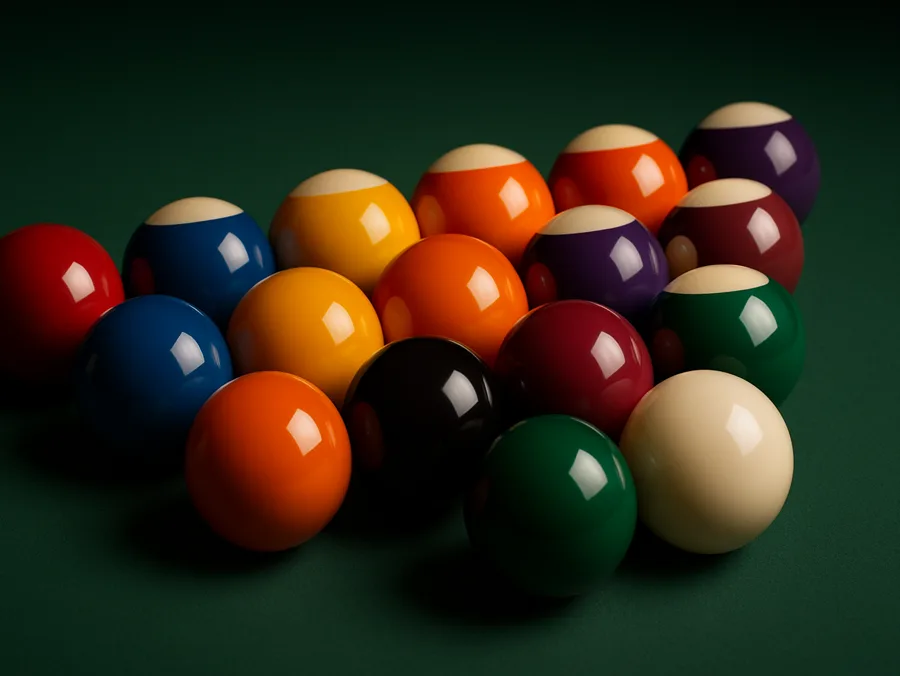
Aramith Regulation Ball Set
Balls that roll trueRegulation 2.25 inch phenolic balls carry proper momentum through long track runs, and the correct-size cue ball keeps coin-op separators working as designed.
Check price on AmazonDrop Pocket Conversion Set
Retiring a broken returnSix drop pockets turn a jam-prone gully table into a zero-maintenance one. Measure your pocket openings before ordering, since iron sizes vary by maker.
Check price on AmazonFrequently asked questions
Why do balls keep getting stuck in my pool table?
The most common cause is worn gully boots, the rubber funnels under each pocket, which sag and trap balls instead of feeding the track. Debris on the tracks and sections knocked loose during a move are the next suspects.
Do ball return tables need electricity?
No. The entire system is gravity fed, with sloped tracks carrying balls from each pocket to the collection tray. Even coin-op tables use purely mechanical separators to sort the cue ball from object balls.
Why does the cue ball come back but other balls do not?
That is a coin-op table doing its job. The separator returns the cue ball through its own channel after a scratch, either by its larger size or a magnetic core, while object balls are held until the table is paid again.
Related guides
LeaguePool is reader-supported. When you buy through links on this site we may earn an affiliate commission at no extra cost to you. As an Amazon Associate we earn from qualifying purchases.