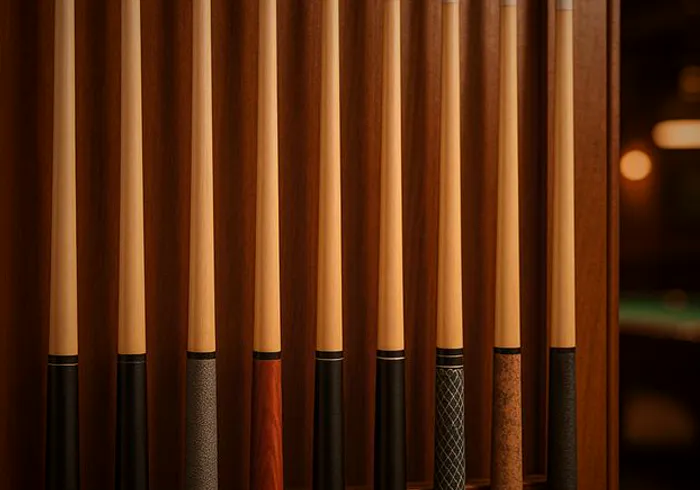
Best Pool Cues for Advanced Players
By the time you are running racks and playing serious position, cue shopping changes. The question is no longer whether a cue is good enough, because almost everything over $300 is. The question is whether a cue matches the stroke you have spent years building, and whether the next dollar buys performance or just prettier points. Advanced players shop for shafts, joints, and feel, roughly in that order.
Here is how the upgrade path works past the intermediate level, and the cues worth putting real money into.
Buy the shaft first
The shaft does nearly all the playing. It sets your deflection, your feedback at contact, and how consistent you are from one room and climate to the next. So the smart advanced-player move is usually shaft-first: pick a Predator REVO, Mezz Ignite, Cuetec Cynergy, or a premium wood shaft, then decide what butt carries it. Every major maker sells shafts separately in the common joint pins, and a flagship carbon shaft on a modest butt will outplay the reverse combination every single time.
Shaft-first has a second advantage. It decouples your upgrade schedule from your cue. Shaft technology moves; butts do not. Commit to a joint pin you like, say a 3/8x10 or Uni-loc, and you can carry the same butt through years of shaft experiments while your grip hand never relearns a thing. Plenty of road players have run the same butt for a decade under a rotating cast of shafts.
- Carbon: maximum consistency, zero maintenance, immune to humidity.
- Premium maple: still competitive, warmer feedback, and some advanced players simply refuse to give up the feel.
Joints and the feel question
At this level feel stops being a vague word and turns into a specification. Wood-to-wood joints and flat-face designs pass more vibration into your hand, a livelier, softer sensation that players describe as hearing the hit. Stainless piloted joints damp that down into a firmer, more solid report. Mezz built part of its reputation on the United Joint, a wood-threaded design with a crisp, immediate feel. Pechauer uses its own Speed Joint for quick assembly and a clean hit. None of this changes where the balls go. All of it changes whether the cue feels like yours, and once you are playing at this level that confidence is worth paying for.
The custom-adjacent tier
Between mass production and true customs sits the most interesting part of cue buying: Mezz, Pechauer, and the Predator limited runs. Mezz cues come out of Japan with machining tolerances that match customs at twice the price. Pechauer is a Wisconsin family shop that still turns its own shafts and backs everything with a lifetime warranty. Predator's limited series bring custom-grade materials to its carbon platform. You get custom-level construction with production-level availability, which for most advanced players is the rational stopping point before the long waitlists and resale games of the true custom world.
Specs advanced players actually tune
Weight distribution matters more than raw weight now. A forward-balanced 19 ounce cue plays completely different from a rear-weighted one, and several makers offer adjustable balance systems worth trying. Tip diameter becomes a real decision here, with 11.8mm rewarding precise spin players and 12.4mm to 12.9mm giving you more forgiveness. Tip hardness settles into medium or medium-hard for most people, since soft tips mushroom too fast under heavy practice. And if you play long-rail kicking games or push-out battles in ten ball, a bolt-on extension has quietly become standard equipment.
Where the money stops helping
Be honest with yourself about the ceiling. Past roughly $800 to $1000 for a playing cue, more money buys artistry, inlay work, and resale cachet. It does not buy performance. That is still a fine reason to spend, because a beautiful cue you love makes you practice, but call it what it is: an aesthetic purchase. The performance budget goes further on a matching second shaft, a quality break cue, or table time. Every advanced player already knows this. The good ones act on it.
The used market deserves a mention. Advanced players churn equipment, so lightly used Mezz, Predator, and Pechauer cues circulate constantly at 60 to 75 percent of retail. If you know how to check a cue, rolling the shaft, inspecting the ferrule, feeling the joint faces, buying used is the best price-to-performance move at this level. These brands hold value well enough that you can resell without much loss if the cue turns out not to suit you.
Our picks
Links open the current selection and price on Amazon so you can compare real reviews before buying.
Predator P3 Cue with REVO Shaft
Flagship carbon platformPredator's top playing platform: the REVO carbon shaft on a machined, weight-adjustable butt. You will see this setup more than any other in strong company.
Check price on AmazonMezz Wavy Series Cue with Ignite Shaft
Japanese precision and feelMezz machining and the United Joint give a crisp, immediate hit, and the Ignite carbon shaft brings the platform fully up to date.
Check price on AmazonPechauer Pro Series Cue
American shop craftsmanshipHand-built in Wisconsin with house-turned shafts and a lifetime warranty. The custom-adjacent wood cue advanced players keep for decades.
Check price on Amazon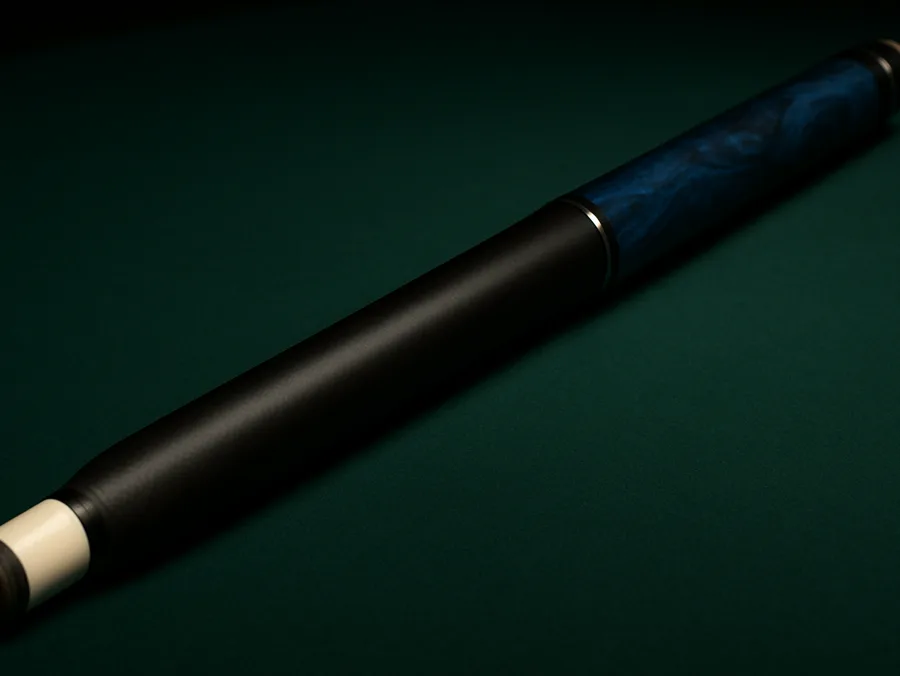
Cuetec Cynergy Cue
Tour-proven valueThe platform Shane Van Boening plays, with the Cynergy carbon shaft standard, at a price well under the other flagship carbon setups.
Check price on AmazonFrequently asked questions
Should I buy a custom cue or a high-end production cue?
Unless you specifically want the artistry or the relationship with a maker, high-end production from Mezz, Pechauer, or Predator gives you the same playability or better, with no waitlist and easier resale. Customs are wonderful. They are a passion purchase, not a performance upgrade.
Is it worth owning two shafts for one butt?
Many advanced players think so. A second identical shaft covers a tip emergency mid-tournament, and a second different shaft lets you switch between carbon and wood feel without changing the butt your grip hand knows.
What tip size do advanced players prefer?
The trend is smaller. 12.4mm is roughly the modern center, with a growing group at 11.8mm. Smaller tips give finer spin control and punish off-center contact more, so match the size to how precise your stroke honestly is.
Related guides
LeaguePool is reader-supported. When you buy through links on this site we may earn an affiliate commission at no extra cost to you. As an Amazon Associate we earn from qualifying purchases.