Do Pool Cues Actually Make a Difference?
Walk into any pool hall and you will hear both versions. The guy who swears his 800 dollar cue added two balls to his game, and the old-timer who beats everybody with a warped house cue off the wall rack. Who is right? Mostly the old-timer. Not entirely, though, and the difference matters if you are about to spend money.
The honest answer: technique first, equipment second
No cue fixes a crooked stroke, and none of them aim for you. A strong player will beat you with the worst stick in the room, because stroke quality dwarfs equipment quality. Equipment is not irrelevant either. A cue with a hardened, glazed tip miscues constantly. A warped shaft makes your sighting inconsistent. A cue that weighs something different every session, because it is a different house cue every session, quietly wrecks the muscle memory you are trying to build. So the fair statement is this: a decent personal cue removes obstacles. It does not add ability.
What a personal cue actually fixes
The case for owning your own cue is about repetition, not magic materials.
- Same weight every time. House cues run from about 18 to 21 ounces and you rarely get the same one twice. Your timing and speed control depend on a consistent weight.
- Same tip every time. House cue tips are usually rock-hard, mushroomed, or half gone. A maintained leather tip that holds chalk is the single biggest playability upgrade in pool.
- Same taper and diameter. Your bridge hand learns one shaft feel instead of adapting every night.
- Straightness you can trust. When you know the cue is straight, you stop blaming equipment for missed shots. That is worth more than it sounds.
Where the money actually goes
On cues under about 500 dollars, price differences come down to a few functional things and a lot of decoration. Worth paying for: a straight, well-seasoned maple shaft, a quality layered tip or at minimum a decent single-layer leather one, a joint that screws up tight without creaking, and a ferrule with no cracks in it. Not worth paying for, at least in terms of how it plays: inlays, exotic wood prongs, fancy wraps, brand prestige. A 700 dollar cue with elaborate points does not hit better than a plain 200 dollar cue from the same maker. You are buying jewelry. Wanting jewelry is legitimate, as long as you know that is what you are doing.
Low deflection shafts: a real but modest edge
Low deflection shafts, carbon fiber included, cut down how far the cue ball squirts sideways when you use English. The effect is real and measurable. It mainly matters if you already use sidespin deliberately and often. A beginner squirting the ball by accident has bigger problems than deflection, and switching shafts means relearning your aiming adjustments anyway. Treat low deflection as an intermediate-to-advanced upgrade, not a shortcut. Plenty of professionals won world titles on standard maple.
The 150 dollar sweet spot
For most players the value curve peaks somewhere around 150 dollars, give or take. At that price, brands like Players, Viking, and the entry Lucasi and Cuetec lines give you straight shafts, real joints, and tips worth keeping. Below about 60 dollars, quality control gives way to luck. Above 300 dollars, the improvements get subtle in a hurry. Buy once in the sweet spot, put ten dollars into keeping the tip shaped and scuffed, and spend what you saved on table time. Table time is the upgrade that shows up on your scoresheet.
Our picks
Links open the current selection and price on Amazon so you can compare real reviews before buying.
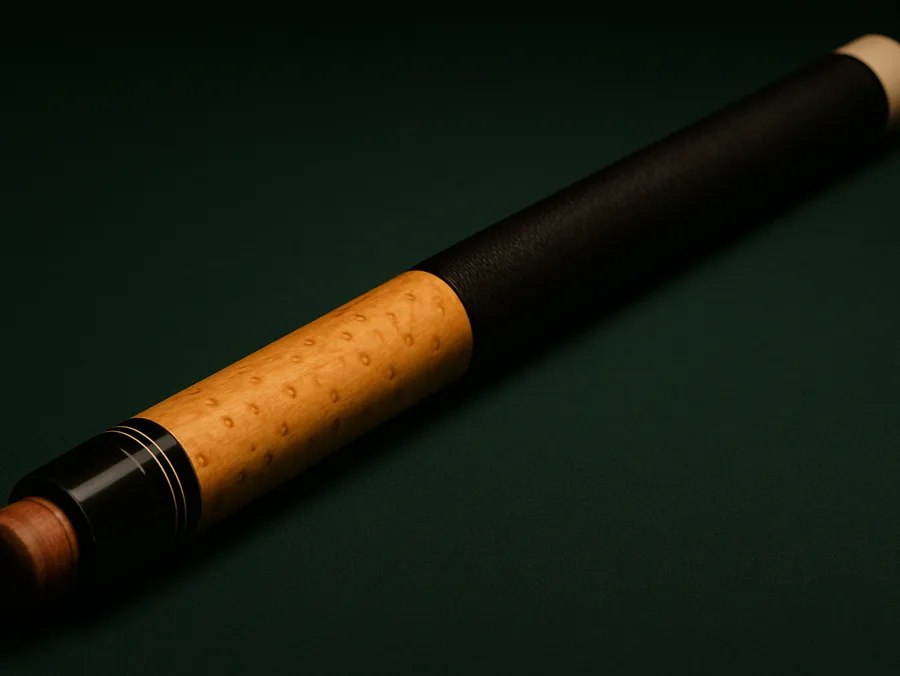
Players classic maple cue
The sweet-spot buyA straight two-piece maple cue with a good leather tip, right at the price point where value peaks. It takes away every excuse a house cue hands you.
Check price on Amazon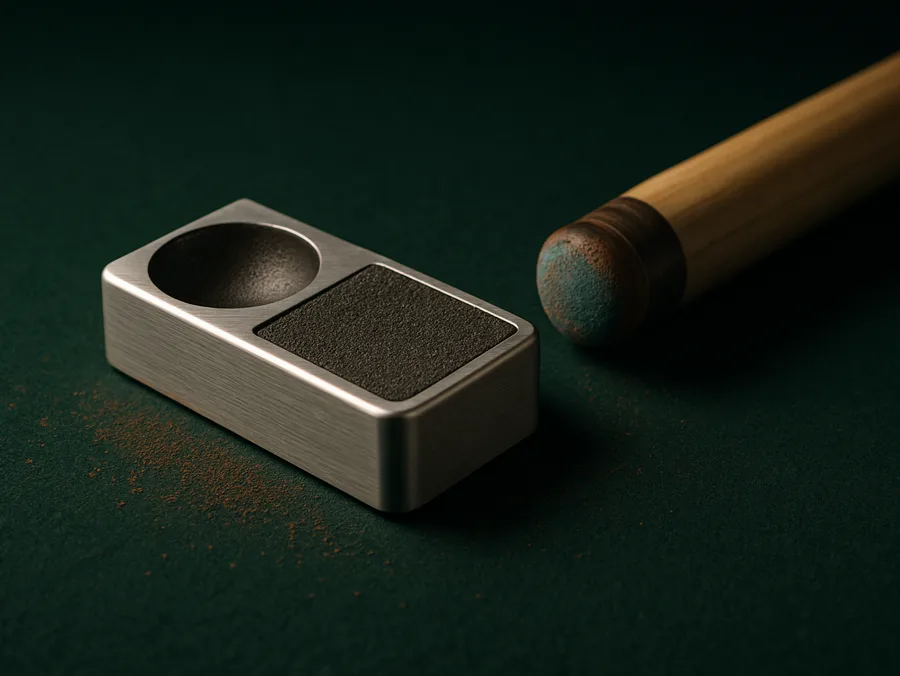
Cue tip shaper and scuffer tool
Keeping the tip playableA maintained tip matters more than the cue behind it. A pocket shaper keeps your tip domed and holding chalk for the price of a couple of games.
Check price on Amazon1x1 hard cue case
Protecting the investmentA basic hard case keeps your shaft straight and your tip undamaged in the trunk, which is exactly where unprotected straight cues go to die.
Check price on AmazonFrequently asked questions
Will an expensive cue improve my game?
Not on its own. Going from random house cues to any straight personal cue with a good tip helps noticeably. Going from a 200 dollar cue to an 800 dollar cue mostly buys appearance and feel. Practice moves your game. A cue just stops holding it back.
What weight pool cue should I get?
Nineteen ounces is the standard recommendation, and most professionals play within an ounce of it. If you can test a few cues, take whichever one lets you control speed best. Consistency matters more than the exact number.
Are carbon fiber shafts worth it?
For committed players who use sidespin a lot, yes. The low deflection and the durability are both real. For casual players, a 400 dollar shaft on a bar table is overkill. Learn a consistent stroke on maple first and upgrade when you can say exactly why you need it.
Related guides
LeaguePool is reader-supported. When you buy through links on this site we may earn an affiliate commission at no extra cost to you. As an Amazon Associate we earn from qualifying purchases.